Before time, before the Heavens and the Hells, before even the void had a name, there was Anu — a single being of impossible perfection in whom every virtue and every sin were bound together as one. Anu was all things at once, and in its longing to become a thing of pure and flawless good, it gathered up all the evil within itself and cast it away.
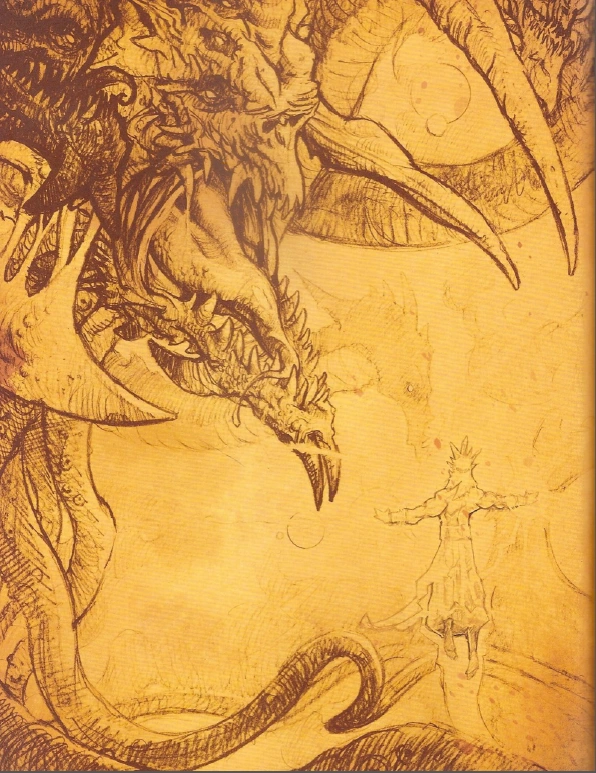
But evil cast out is not evil destroyed. The discarded malice coiled and thickened and woke as Tathamet, the seven-headed Dragon, the embodiment of every wickedness Anu had renounced. The two were perfect opposites and perfectly matched, and when at last they met they annihilated one another utterly.
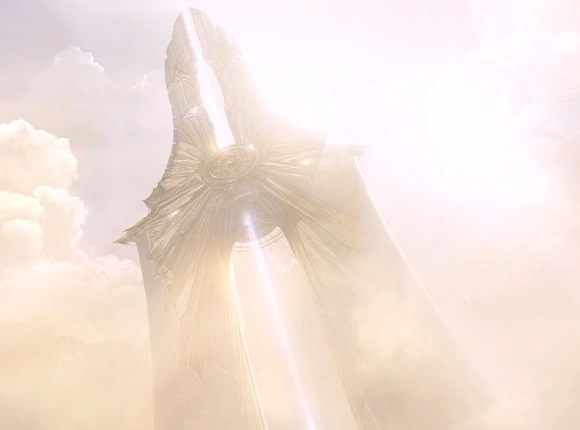
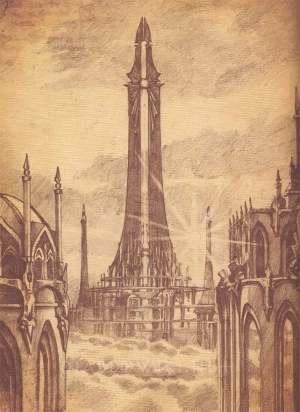
From Anu's lifeless spine grew the Crystal Arch, the radiant spire from which the angels would resonate into being and the High Heavens take shape. From Tathamet's seven-headed corpse spilled the Burning Hells and the seven Great Evils. Thus the Eternal Conflict was not begun by hatred or ambition — it was simply the first division of a single soul, echoing forever.
Tathamet was the sum of all evil cast out of Anu at the dawn of existence — a vast dragon crowned with seven heads, each head a distinct and monstrous sin. It is the dark mirror of Anu, equal in power and opposite in nature, and its death in their mutual annihilation seeded the whole of the lower realms.
From its remains rose the seven Great Evils, splinters of the Dragon's malice given will and form: the three Prime Evils — Hatred, Terror, and Destruction — and the four Lesser Evils of Pain, Anguish, Sin, and Lies. Every demon that has ever clawed at the gates of Sanctuary is, in the end, a fragment of Tathamet.
Though the Dragon itself is gone, mortals sometimes speak of "the Prime Evil" as a single ultimate enemy — and indeed, when one being gathers the essence of all seven into itself, it becomes something perilously close to Tathamet reborn.
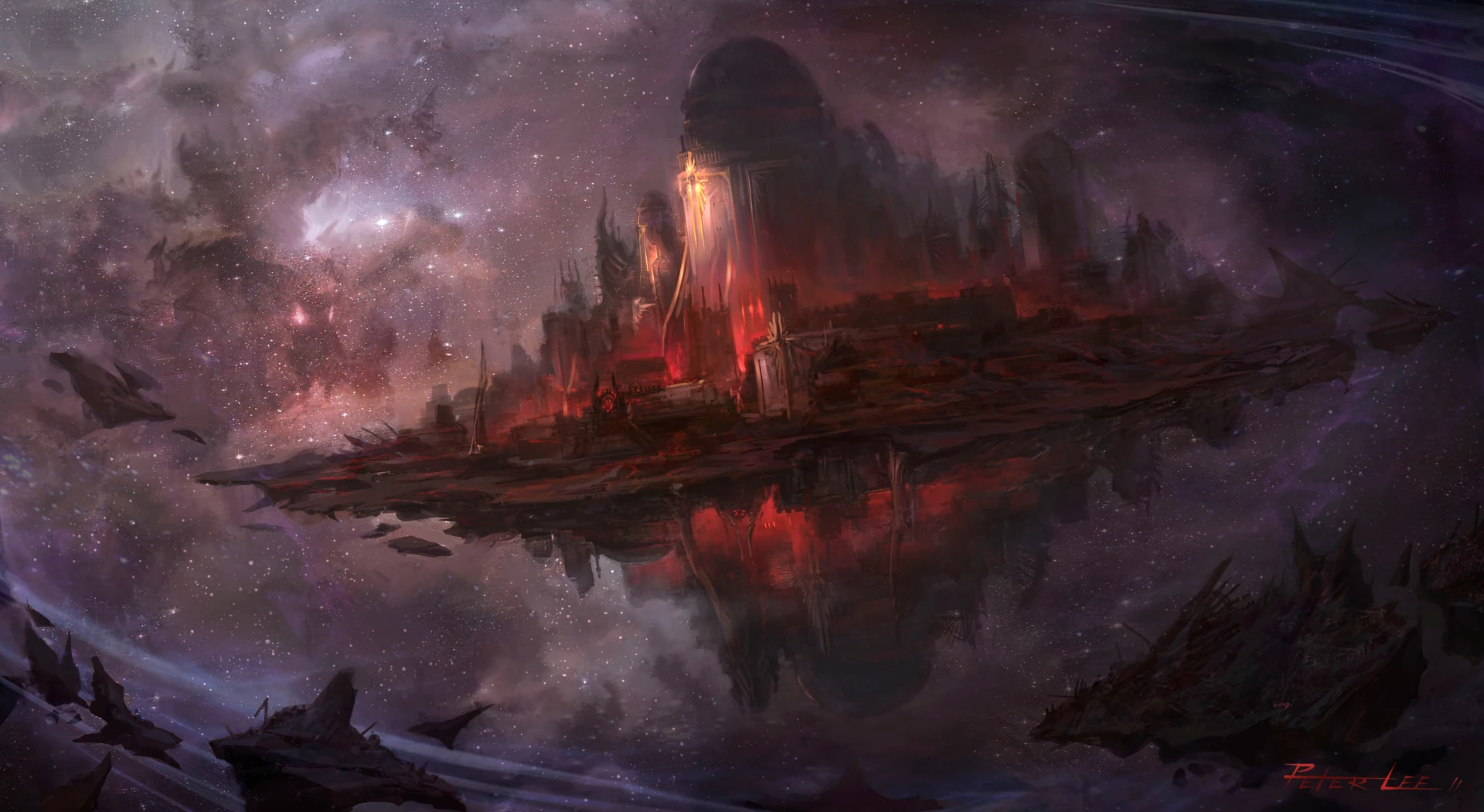
At the very heart of the High Heavens rises the Crystal Arch, a towering spire of living light said to be the lingering soul of Anu itself. It is to the angels what a wellspring is to a river — the source from which they are born and the resonance that gives them purpose.
New angels do not grow as mortals do; they sound into being from the Arch, each a distinct chord of a single eternal song, each embodying one facet of virtue. The five greatest of these resonances became the Angiris Council. To damage the Arch is to wound the Heavens at their root, and its light is as much a weapon against the demonic as any blade.
Since the death of Anu and Tathamet, the angels of the High Heavens and the demons of the Burning Hells have warred without pause across the gulf between their realms. It is not a war of conquest so much as a war of essence: order against ruin, light against the dark, each side unable to exist while the other endures, and neither able to win.
Much of the fighting has centered on Pandemonium, the contested ground between the realms, and on the Worldstone, an artifact of reality-shaping power. For aeons the balance held — until the angel Inarius and the demon Lilith grew weary of the slaughter and stole away to forge a refuge of their own.
That refuge — Sanctuary, and the Nephalem born within it — introduced a third power into a war that had only ever known two. Whether humanity becomes the weapon that finally ends the Conflict, or merely its newest battlefield, is the question every chapter of the saga returns to.
Grown from the Crystal Arch at the death of Anu, the High Heavens are a realm of impossible, crystalline beauty — silver spires, drifting isles of light, and cathedrals of pure resonance that shift with the will of their makers. Here dwell the angels, beings of singular purpose ruled by the Angiris Council.
Yet the Heavens are not gentle. Their justice can be absolute and their mercy thin; more than one archangel has judged humanity guilty simply for the demon blood in its veins. It was the Heavens, after all, that nearly voted to erase Sanctuary entirely.
The Heavens have been breached only rarely, and always at terrible cost — most infamously when the reborn Prime Evil stormed them directly, and the Nephalem were forced to defend the seat of the angels themselves.
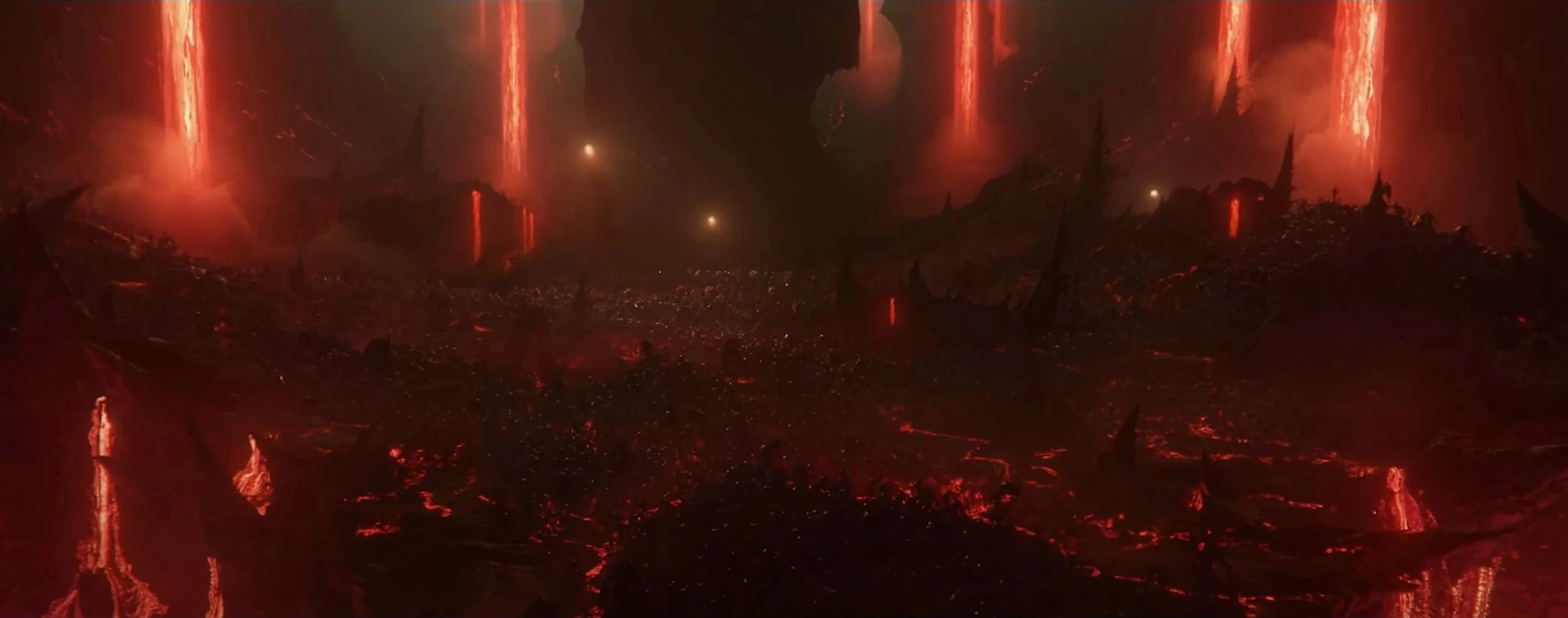
A realm of fire, ash, and endless torment risen from the corpse of Tathamet, the Burning Hells are home to the Prime Evils, the Lesser Evils, and the uncounted demonic legions that serve them. Its geography is cruelty made landscape: rivers of flame, fields of the impaled, and fortresses of bone.
The Hells are not a unified kingdom. The Great Evils scheme endlessly against one another as much as against the Heavens, and it was this very treachery that led the Lesser Evils to overthrow and exile their masters in the Dark Exile.
It is said the Hells have no true floor — that however deep a soul descends, there is always something further down. To fall into the Burning Hells is not to reach a bottom, but to keep falling.
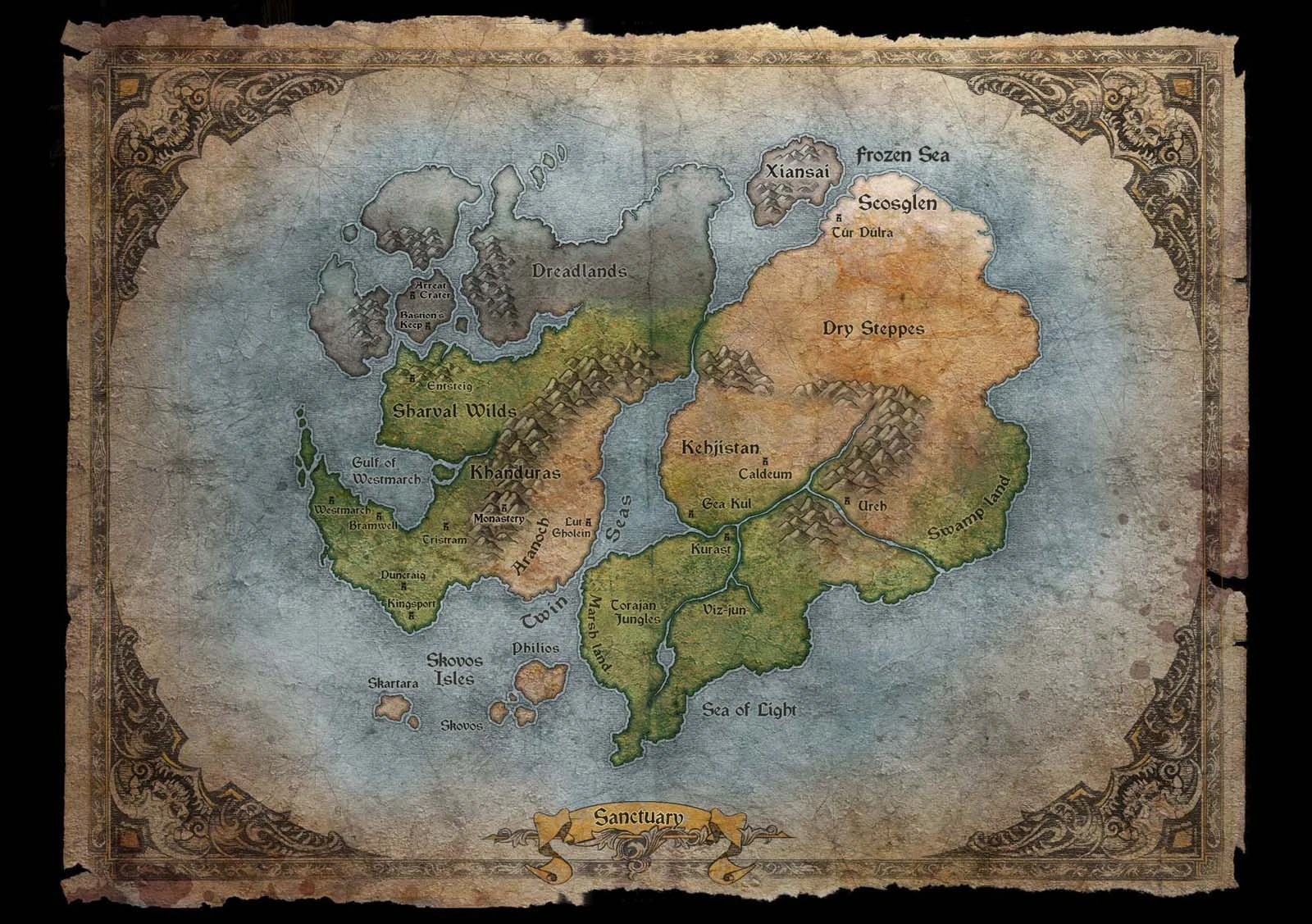
Sanctuary is the mortal world — forged in secret by renegades of both Heaven and Hell using the stolen Worldstone to hide it from the Eternal Conflict. It is a world of deserts and jungles, frozen peaks and drowned moors, of proud kingdoms and plague-struck villages, and it should not, by the laws of the higher powers, exist at all.
Its first children were the Nephalem, born of union between angel and demon and possessed of power to rival both. Fearing them, Inarius used the Worldstone to dim that birthright generation by generation, until the Nephalem's descendants became simply humanity — mortal, fragile, and forgetful of what they once were.
Yet the old power is not gone, only sleeping. In every age of dire need, a few awaken to the full inheritance of the Nephalem, and it is they who decide whether Sanctuary survives. Both Heaven and Hell covet this world; both have tried to claim or destroy it; and it endures, again and again, because mortals are willing to take up the blade.
Between the High Heavens and the Burning Hells lies Pandemonium, the scarred and shifting ground where the Eternal Conflict has been fought most fiercely and most often. It is a realm of ruin and grey storm, broken battlements and the wreckage of ages of war.
At its heart once stood the fortress that safeguarded the Worldstone — until Inarius and Lilith stole the artifact away to forge Sanctuary. Pandemonium remains a strategic crossroads, and in later ages the Nephalem would pass through its fortress to carry the war into the Hells themselves.
The three greatest of the Great Evils, born of Tathamet's mightiest heads: Mephisto, the Lord of Hatred; Diablo, the Lord of Terror; and Baal, the Lord of Destruction. Together they are the Prime Evils, and for ages they ruled the Burning Hells unchallenged.
Their reign ended not at the hands of the Heavens but their own kind: the Lesser Evils rose in rebellion and cast the three brothers down into Sanctuary in the event mortals call the Dark Exile. There, walking in secret among men, they became the central terror of the saga.
Though each is fearsome alone, it is their union that mortals dread most — and the prophecy that all seven Evils might one day be gathered into a single vessel, recreating the Dragon. To prevent exactly this, the Horadrim were founded.
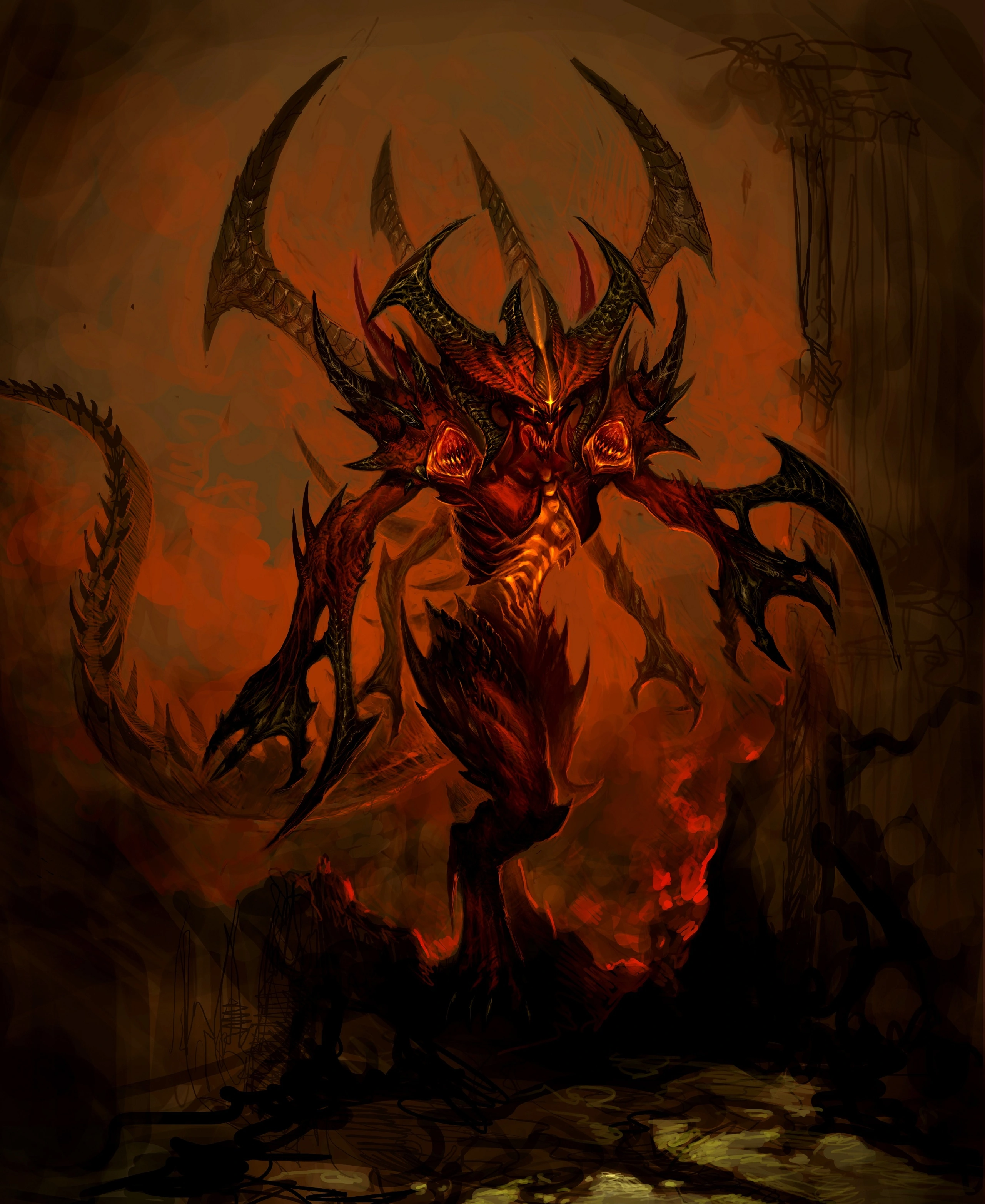
Eldest in cunning of the three brothers, Diablo is terror itself given form — not merely fear of death, but the slow, paralyzing dread that unmakes the will before a blow is ever struck. Of all the Prime Evils, he has reached for Sanctuary most often, and paid for it most often, and returned every time.
Bound within a soulstone by the Horadrim and buried beneath the cathedral of Tristram, he corrupted the mad king Leoric and festered for years before a hero struck him down — only to take the soulstone into their own flesh and become the Dark Wanderer, carrying terror east across the world.
Later he would be reborn through the sacrifice of Leah, made whole within the Black Soulstone as the one Prime Evil, and storm the High Heavens directly before the Nephalem cast him down. "Not even death can save you from me" is not a boast. For Diablo, it has always simply been true.
Eldest and most patient of the Prime Evils, Mephisto is the Lord of Hatred — and hatred, he knows, is a slower and surer poison than terror or destruction. He does not need to burn a kingdom when he can turn its people against one another and let them burn it themselves.
His masterwork was the corruption of the Zakarum, the great church of the Light in the east. From within its holiest temple in Kurast, Mephisto rotted the faith over generations, twisting its priests into fanatics and monsters while the faithful never suspected the cancer at the heart of their religion.
He is the father of Lilith, and through her his blood runs in the Nephalem themselves — a bitter irony, that the children who may end the Evils carry the Lord of Hatred's lineage.
Youngest and most volatile of the brothers, Baal is the Lord of Destruction — not cruelty for its own sake, but the raw, ecstatic urge to unmake all that exists and leave nothing behind. Where Mephisto schemes and Diablo terrifies, Baal simply tears the world apart.
When his soulstone was shattered in the effort to bind him, the Horadrim mage Tal Rasha offered his own living body as a prison, chaining himself in a desert tomb near Lut Gholein to hold the demon at bay. It was not enough. Freed at last, Baal marched north to Mount Arreat and the Worldstone itself.
There he corrupted the Worldstone so utterly that Tyrael was forced to destroy it, shattering the cornerstone of reality to deny it to the Lord of Destruction — and scarring Sanctuary forever.
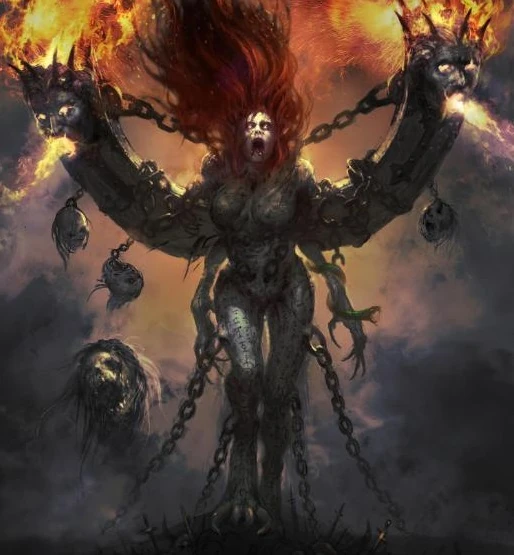
Beneath the Prime Evils stand the four Lesser Evils, each born of a head of Tathamet: Andariel, the Maiden of Anguish; Duriel, the Lord of Pain; Belial, the Lord of Lies; and Azmodan, the Lord of Sin.
They are called "lesser" only beside the three brothers — each is a catastrophe in its own right. It was the four of them, weary of serving, who rose up and overthrew their masters, casting the Prime Evils into Sanctuary in the Dark Exile and seizing the Burning Hells for themselves.
In later ages, Belial's lies and Azmodan's endless legions would each threaten Sanctuary directly, while Andariel and Duriel served the schemes of the very brothers they once exiled.
Andariel, the Maiden of Anguish, is one of the four Lesser Evils — a demon queen who feeds on suffering and despair. Though she helped exile the Prime Evils, she later threw in with the Dark Wanderer's cause.
She seized the monastery of the Sisterhood of the Sightless Eye, corrupting many of the rogues and drowning the order in venom and dread. She is among the first great horrors a hero must overcome in the pursuit of the Dark Wanderer, her defeat reopening the path east.
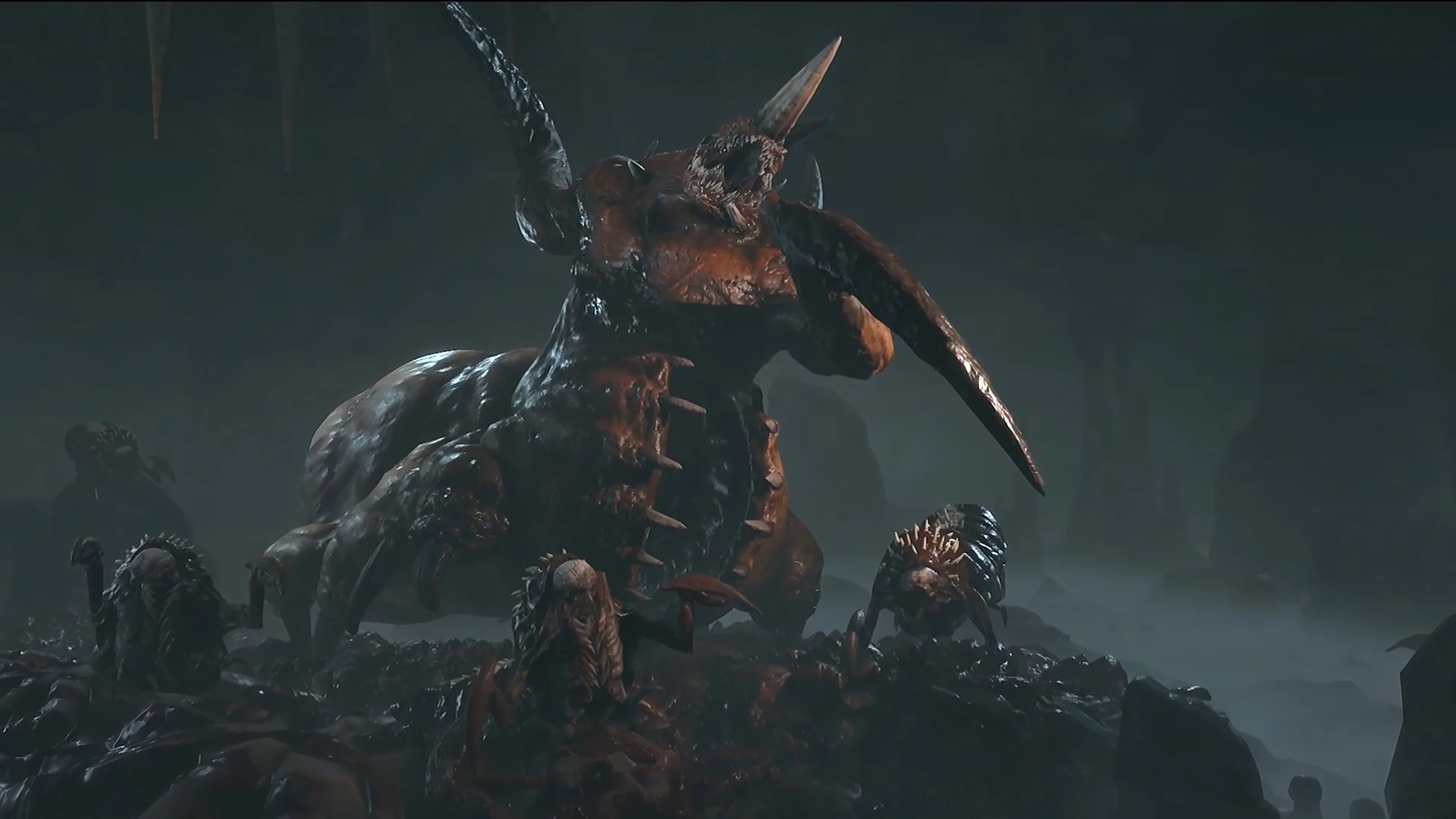
Duriel, the Lord of Pain, is brother to Andariel and one of the four Lesser Evils — a bloated, maggot-like horror of crushing strength and unbearable cold. Pain is his domain, and he inflicts it without art or mercy.
He was set to guard the desert tomb of Tal Rasha, where Baal lay imprisoned. When the Dark Wanderer came to free his brother, Duriel waited in the dark to destroy any who reached the chamber first.
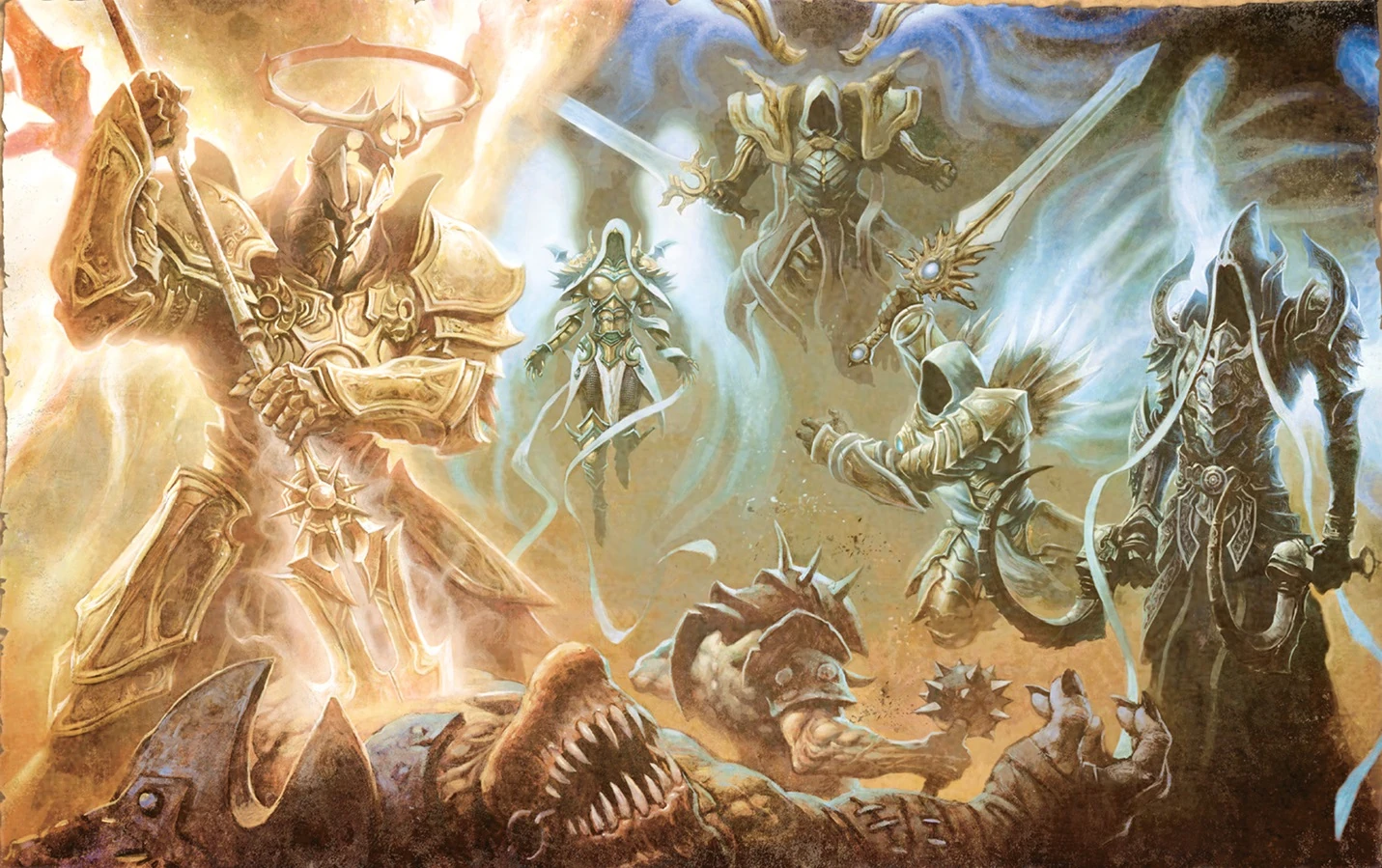
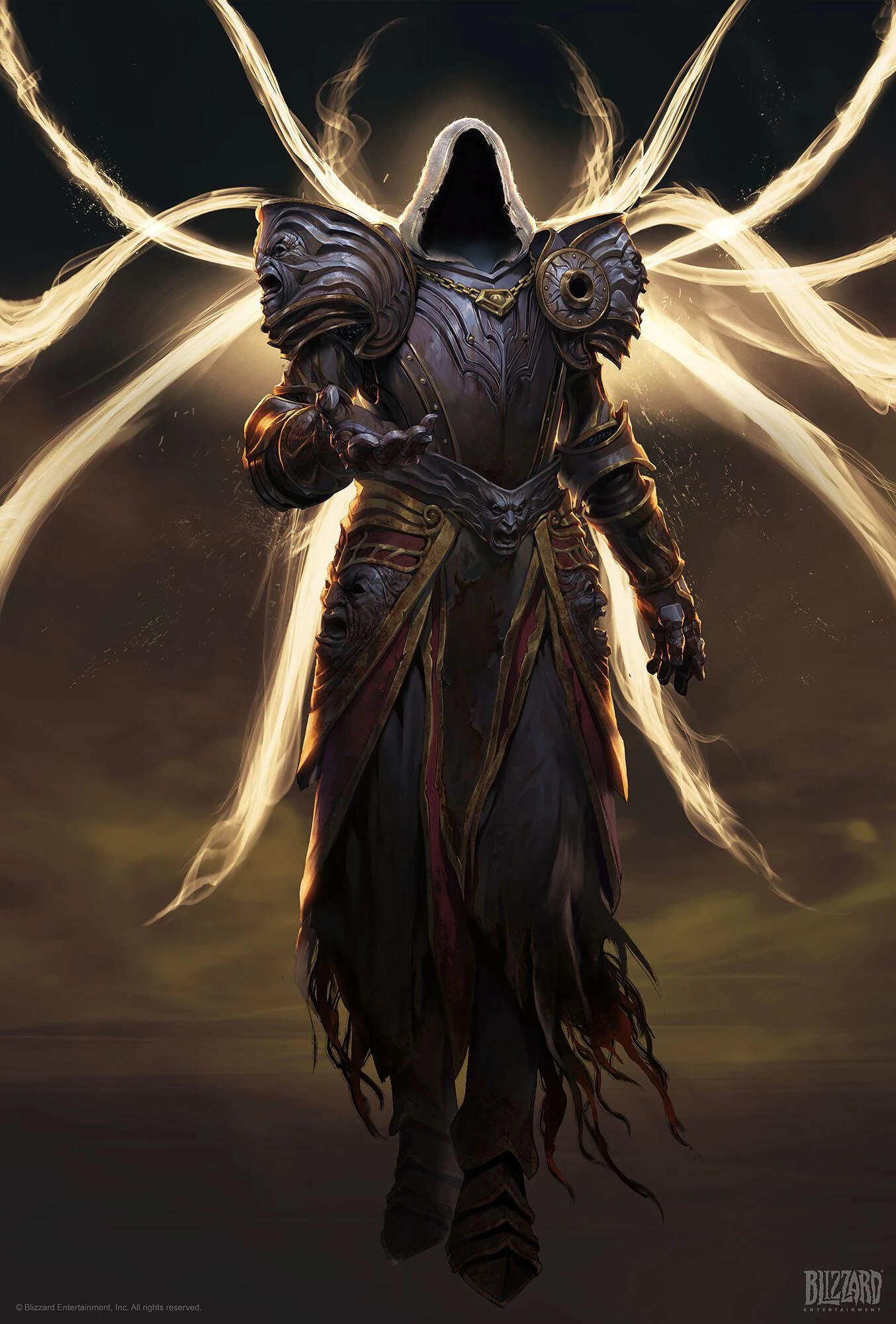
Five archangels resonate from the Crystal Arch as the ruling voices of the High Heavens: Imperius of Valor, Auriel of Hope, Tyrael of Justice, Malthael of Wisdom, and Itherael of Fate. Together they are the Angiris Council, and their decisions shape the course of the Eternal Conflict.
The Council is far from united. Imperius would sooner see humanity destroyed for its demonic taint; Malthael withdrew into silence and later into death; only Tyrael consistently championed mortal-kind. It was the Council that judged Sanctuary at the close of the Sin War — and by the narrowest of margins, a single vote, chose to let humanity live.
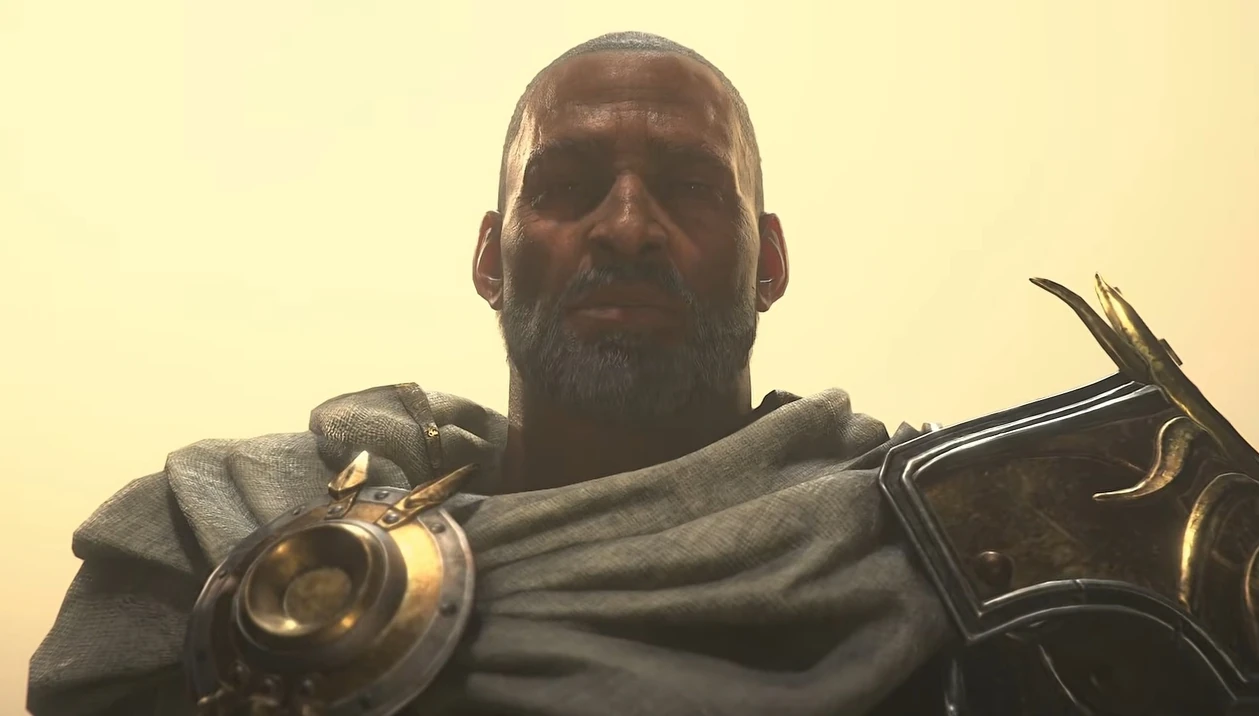
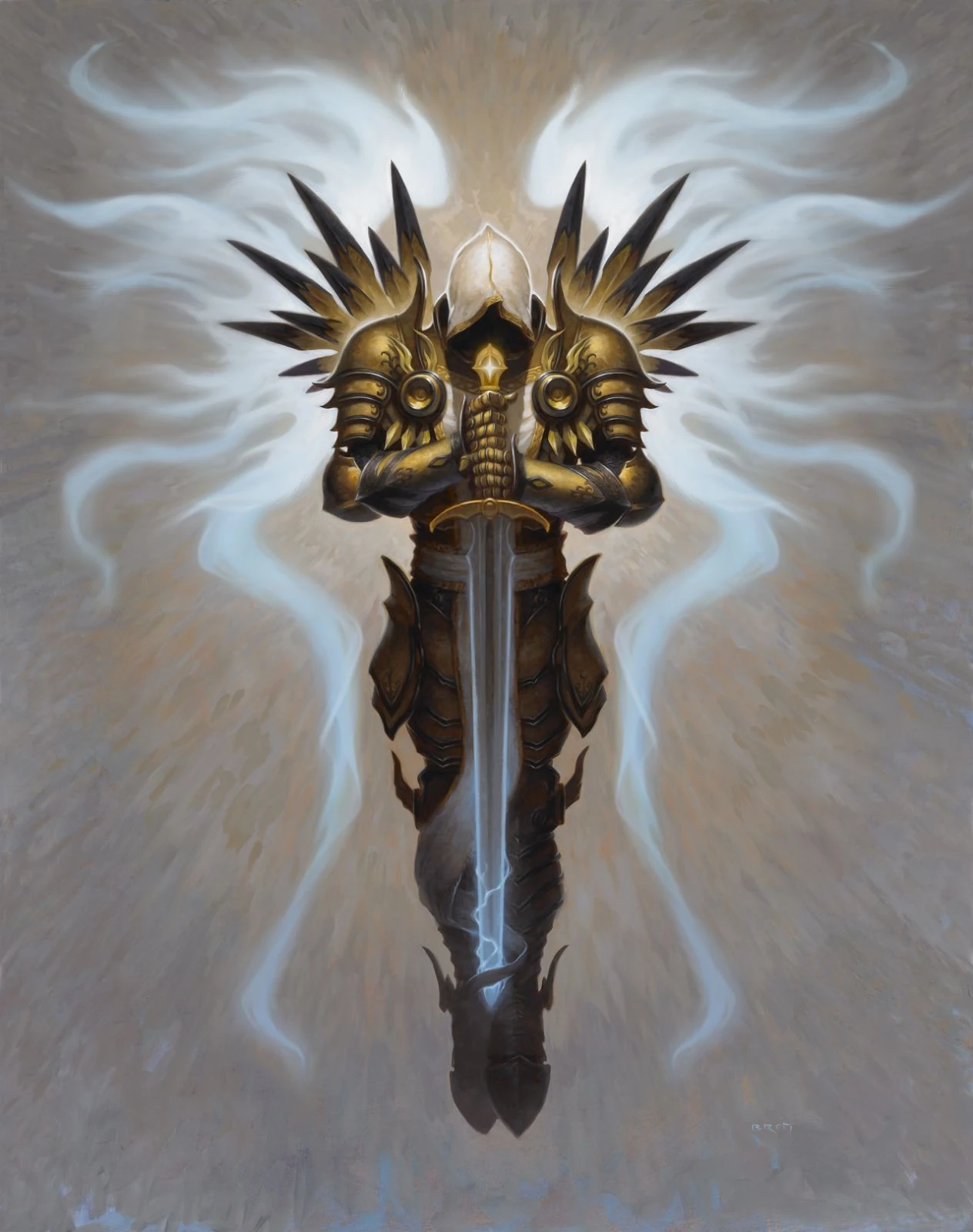
Alone among the Angiris Council, Tyrael, the Archangel of Justice, believed in mortals — that the children of Sanctuary deserved the right to choose their own fate, neither damned for their demon blood nor saved against their will.
He founded the Horadrim to hunt the exiled Prime Evils, armed them with soulstones, and when Baal corrupted the Worldstone beyond saving, it was Tyrael who shattered it with his blade El'druin — knowing the cost. To stand fully with humanity he cast off his own immortality, falling to Sanctuary as a mortal and rising again as the Aspect of Wisdom.
In every age of the saga, Tyrael is the hinge upon which Sanctuary's survival turns: the angel who chose mortals, and paid for that choice with his divinity.
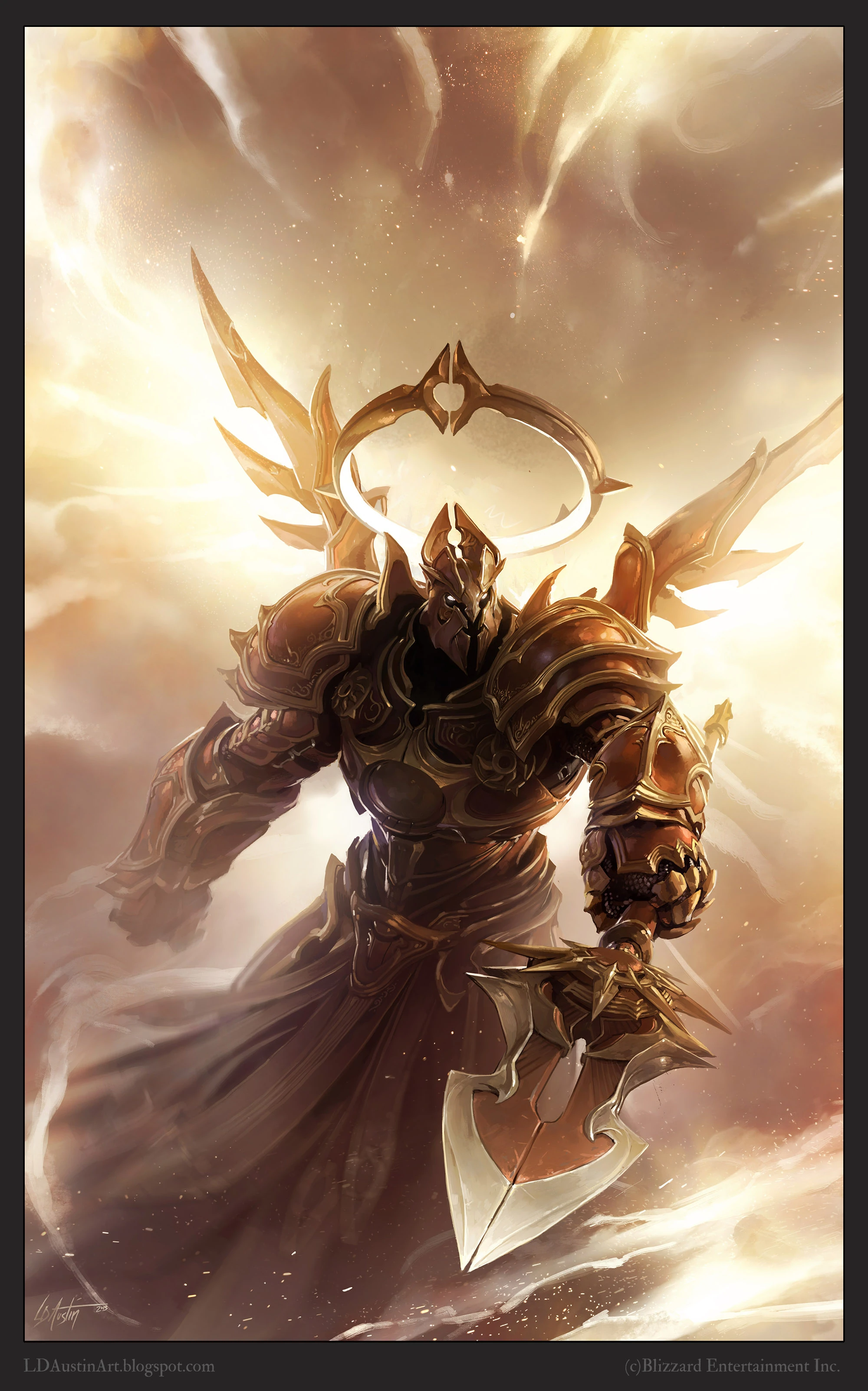
Imperius, the Archangel of Valor, is the fierce and prideful leader of the Angiris Council — the greatest warrior of the High Heavens and its most unyielding will. His courage is beyond question; his compassion is not.
He despises the demons of the Burning Hells utterly, and trusts humanity little more, seeing in mortals only the corruption of their infernal heritage. More than once his pride and his contempt for Sanctuary have set him at odds with Tyrael — and very nearly made him humanity's enemy as surely as any demon.
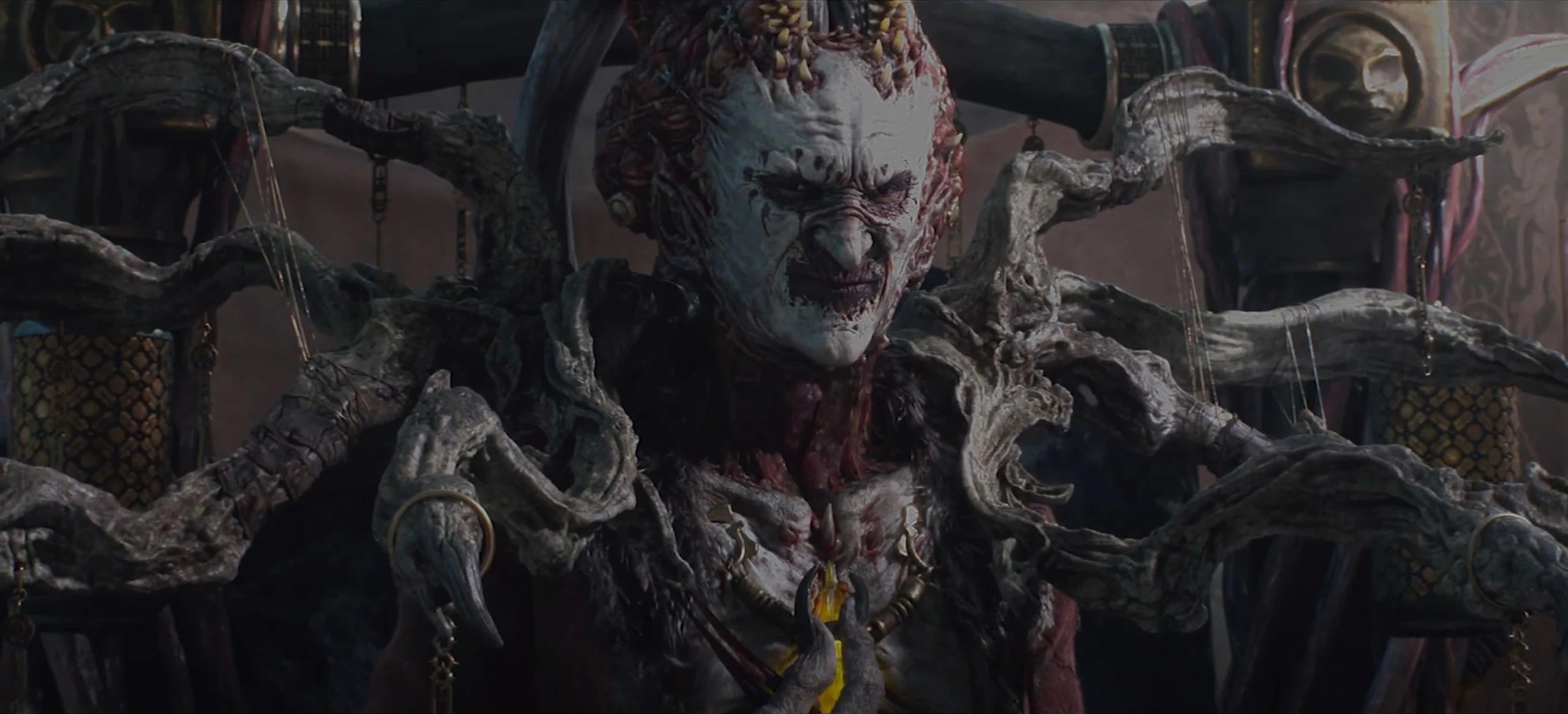
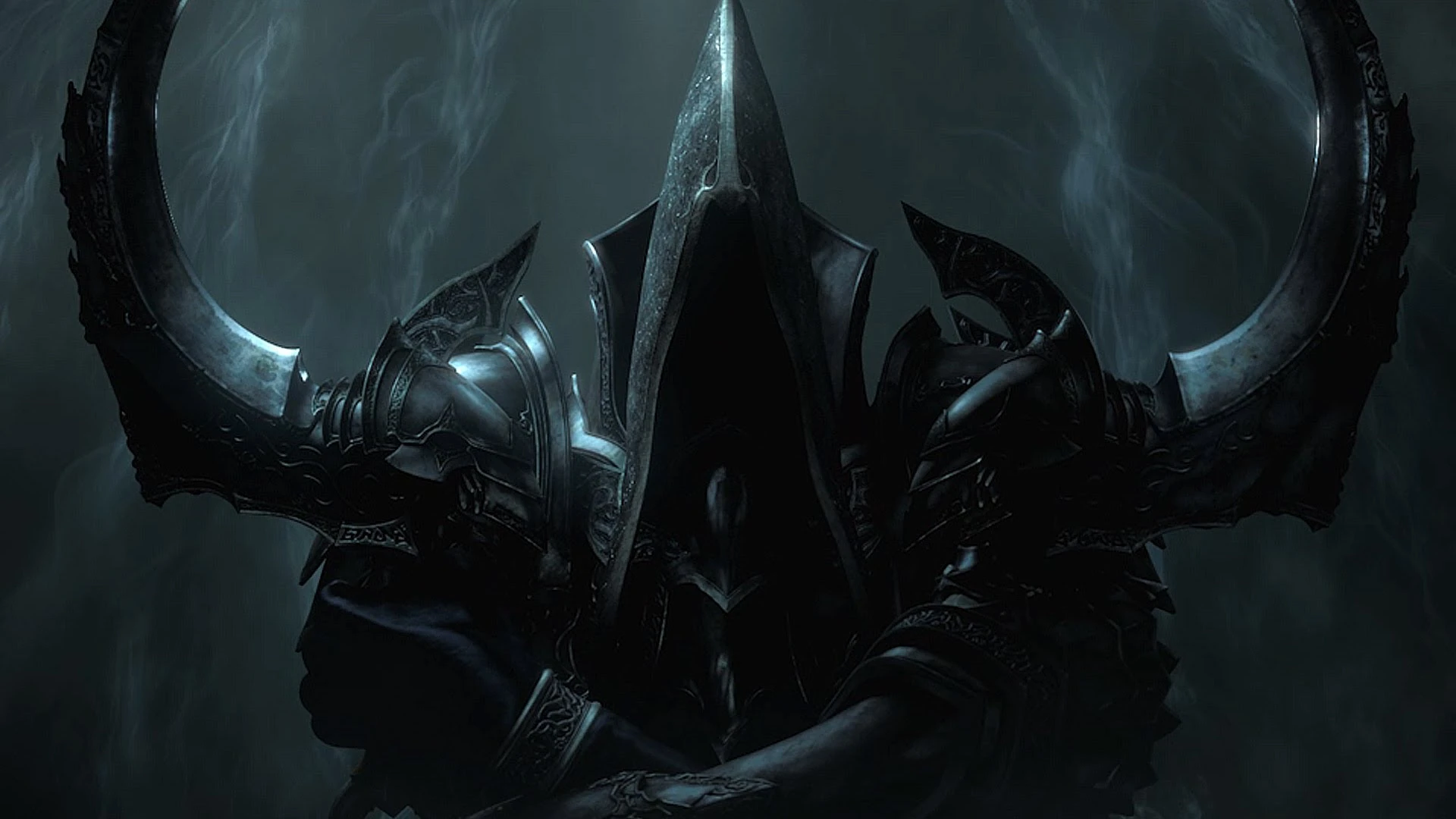
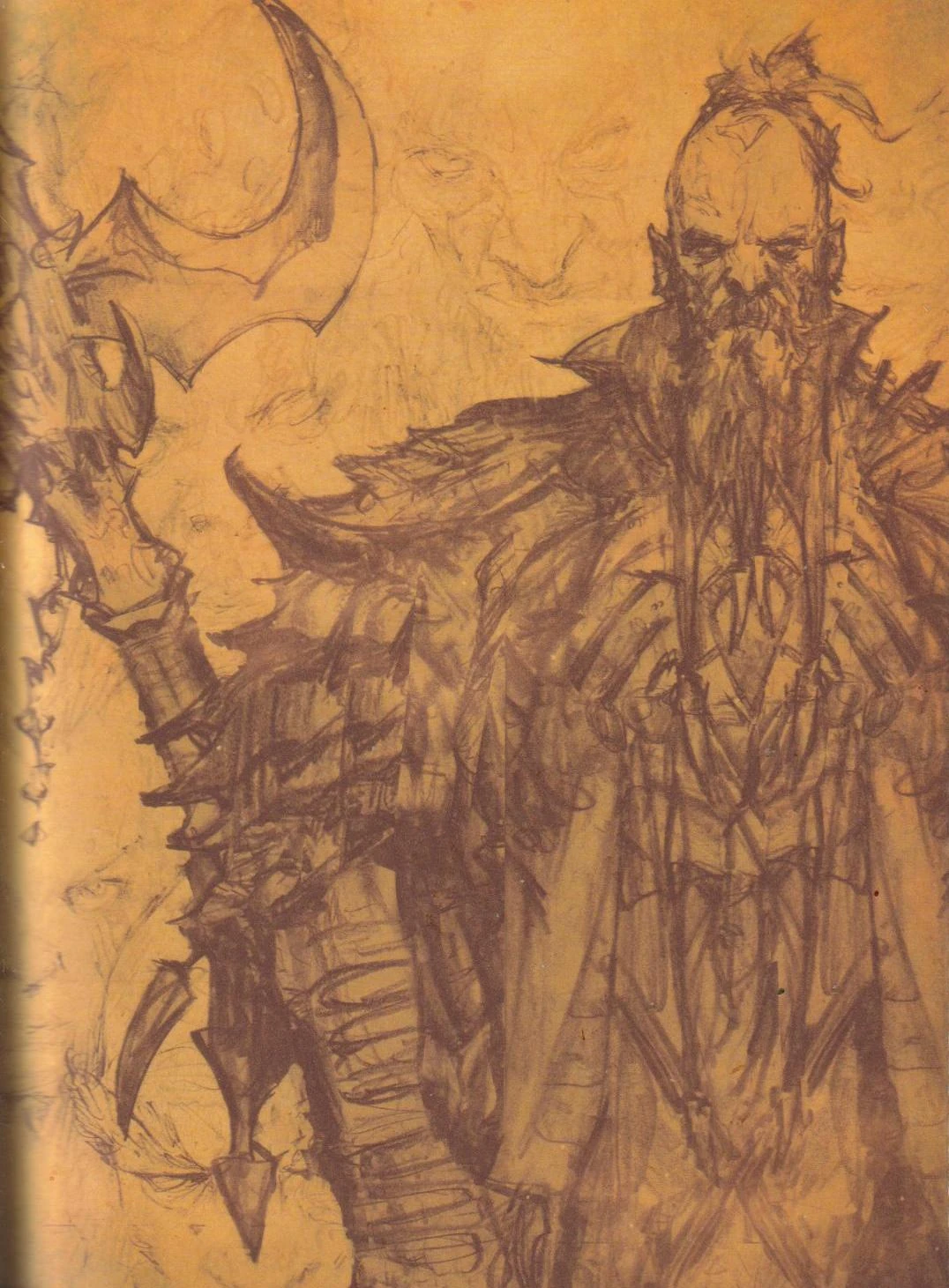
Once Malthael was the Archangel of Wisdom and a voice of the Angiris Council. But the destruction of the Worldstone broke something in him; wisdom without hope curdled, and he vanished from the High Heavens entirely.
He returned transformed — the Aspect of Death, cold and absolute. Seizing the Black Soulstone with all seven Evils bound within it, Malthael resolved to end the Eternal Conflict by erasing the demonic essence from existence. The trouble was where that essence lived: in humanity itself, in the demon blood of every mortal descended from the Nephalem.
To save creation as he saw it, Malthael would reap all of Sanctuary, beginning with Westmarch. Only the Nephalem stood between the Angel of Death and the end of everyone.
But Inarius and Lilith wanted different things from their creation. Where she saw in the Nephalem a power to end the war, he saw only a threat — and a reminder of his sin. He used the Worldstone to dampen their power and, when Lilith slaughtered those who opposed her vision, he banished her into the Void rather than rule beside her.
Ages later, after long torment in the Hells, Inarius returns to Sanctuary with his own design for its salvation — and finds Lilith there before him, waiting for the reckoning between them that has been ages in the making.
The Nephalem were the first inhabitants of Sanctuary — born of union between the renegade angels and demons who fled the Eternal Conflict. They were neither angel nor demon but something new and terrible in their potential: beings who could, in time, eclipse the Prime Evils and the Angiris Council alike.
This power terrified Inarius, who used the Worldstone to dim it across generations until the Nephalem's descendants dwindled into ordinary humanity — mortal, short-lived, and ignorant of their birthright. Lilith, who would have let them grow into a force to end the war, was cast out for it.
Yet the inheritance was never truly erased, only buried. In ages of greatest need, individuals awaken to the full power of the Nephalem — and it is these awakened heroes, again and again, who stand against the darkness when angels and demons both have failed.
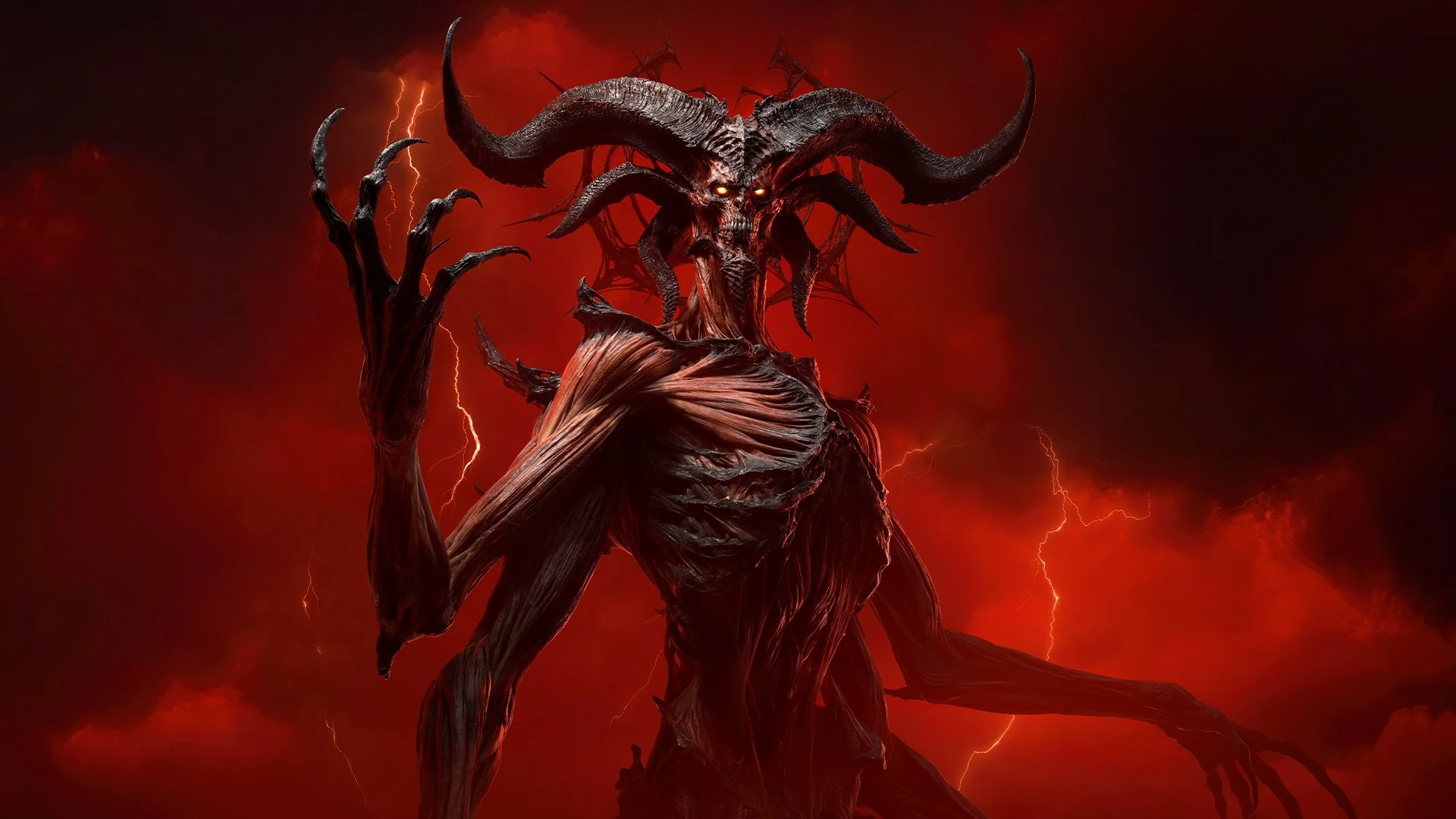
Lilith is the daughter of Mephisto, the Lord of Hatred — and one of the two architects of Sanctuary. With the angel Inarius, her lover, she stole the Worldstone and forged the mortal world, and from their union and others came the first Nephalem.
Where Inarius feared their children, Lilith adored them — not out of tenderness alone, but ambition. She saw in the Nephalem a power that could end the Eternal Conflict for good, and she would let nothing endanger that future, murdering the angels and demons who would have culled or controlled them. For this, Inarius banished her into the Void.
Ages later she is summoned back in blood, and her vision has only hardened: a humanity forged through suffering into a force neither Heaven nor Hell could ever command. She names herself a savior, and means it — which is precisely what makes her so dangerous.
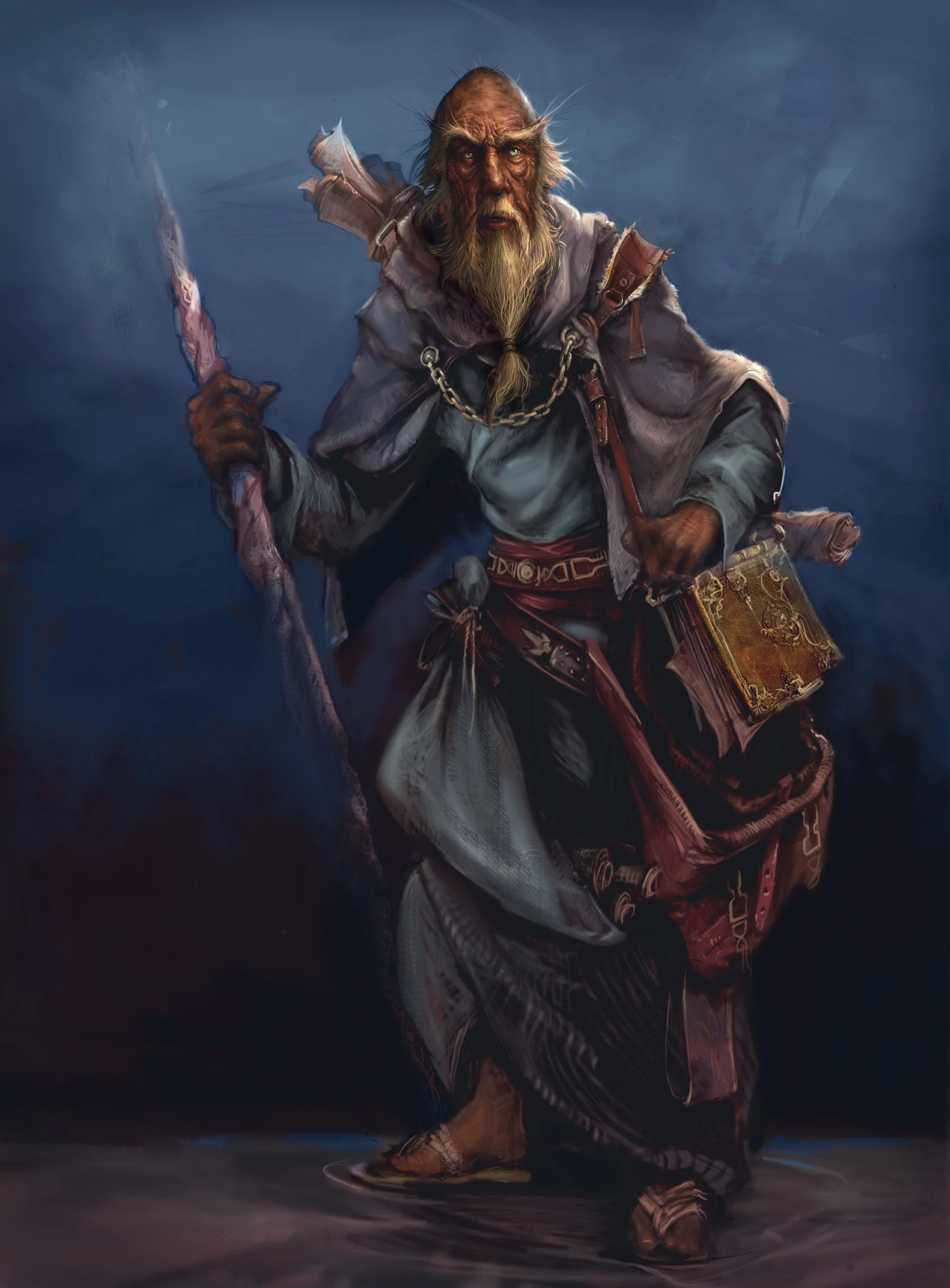
Deckard Cain was the last living member of the Horadrim, and for much of his long life the only soul in Sanctuary who truly understood the danger gathering in the dark. A scholar and a lorekeeper, he devoted his years to the histories of the eternal war.
When Diablo stirred beneath Tristram, it was Cain who recognized the truth, who counseled the heroes that descended, and who survived the town's destruction to carry the warning onward. He raised Leah as his own ward, never knowing — or never admitting — what she would become.
His patience and his learning guided three ages of heroes, and his invitation became the warmest words in all of Sanctuary: "Stay awhile, and listen."
The Horadrim were a secret order of mages assembled by the archangel Tyrael for a single, desperate purpose: to hunt the Prime Evils loosed upon Sanctuary in the Dark Exile and bind them where they could do no harm.
Armed with soulstones — crystals able to imprison a demon's essence — they ran the three brothers to ground one by one. Their greatest sacrifice was Tal Rasha, who gave his own body as a living prison for Baal when no stone would hold him.
Over the centuries the order dwindled, its purpose half-forgotten, until only one remained to remember why it had ever existed: Deckard Cain, the Last Horadrim.
Tal Rasha was the greatest of the Horadrim, and his name is remembered for the most terrible bargain of the order's history. When the soulstone meant to hold Baal cracked and could no longer contain the Lord of Destruction, Tal Rasha offered the only prison that remained: himself.
In a tomb hidden in the desert near Lut Gholein, he was bound to a pillar with the cracked soulstone driven into his own chest, wrestling the demon's will for centuries so that the world might be spared. It was a slow martyrdom without end or hope of rescue.
When the Dark Wanderer came seeking his brother, it was Tal Rasha's tomb he sought to breach — and the Lesser EvilDuriel who guarded the way.
Leah was raised by Deckard Cain as his own, a brave and good-hearted young woman who became his closest companion in his final years. She did not know the truth of her birth: that she was the daughter of the witch Adria, and that her father was a mortal vessel of Diablo himself.
When the fallen star struck Tristram, Leah stood with the Nephalem against the rising darkness, growing into power of her own. But her own mother had been grooming her for one purpose from the beginning.
In the heart of the Black Soulstone, Adria sacrificed her daughter to make Leah the vessel of the reborn Prime Evil — a betrayal that gave Diablo flesh and took from Cain's memory the last person he loved.
Adria the witch played every side of the Eternal Conflict for decades, and won. To the heroes of Tristram she was a helpful sage; in truth she had served Diablo from the start, bearing his mortal vessel's child and waiting through the years for her design to ripen.
When the Prime Evils were bound in the Black Soulstone, Adria guided the Nephalem to gather them — then revealed her purpose, sacrificing her own daughter Leah to forge Diablo whole and ascendant.
She is the saga's great betrayer: not a monster, but a mortal who chose the dark with open eyes and patience beyond reckoning.
The Zakarum began as a faith of genuine righteousness, founded to spread the worship of the Light across the eastern lands of Sanctuary. From its great temple in Kurast it grew into the mightiest religion the world had known, its zealous Paladins carrying the Light into every shadow.
But the Light had been hollowed out from within. Mephisto, Lord of Hatred, had been imprisoned beneath the very temple at the faith's heart, and over generations his influence corrupted the priesthood utterly — turning holy men into fanatics and finally into monsters, while the faithful prayed on, none the wiser.
From this rot came both horror and hope: the corrupted church that heroes had to cleanse, and the true Paladins who broke from it to fight the darkness their faith had become.
A small, ill-fated town in the kingdom of Khanduras, built in the shadow of an old cathedral that stood, unknowing, atop a Horadric prison. Beneath Tristram, in sixteen descending floors of catacomb and hell, Diablo festered within his soulstone.
The Lord of Terror corrupted King Leoric into the Skeleton King and drew a lone hero down into the dark — the fall of Tristram that began the entire saga. Years later a falling star struck the town's ruins, and the Nephalem gathered there once more.
Razed, rebuilt, and razed again, Tristram is the wound from which the whole of the saga bleeds — and the home of its last lorekeeper, Deckard Cain.
Far in the frozen north rises Mount Arreat, the holiest place in all of Sanctuary — for within its summit was hidden the Worldstone itself, the cornerstone of the world.
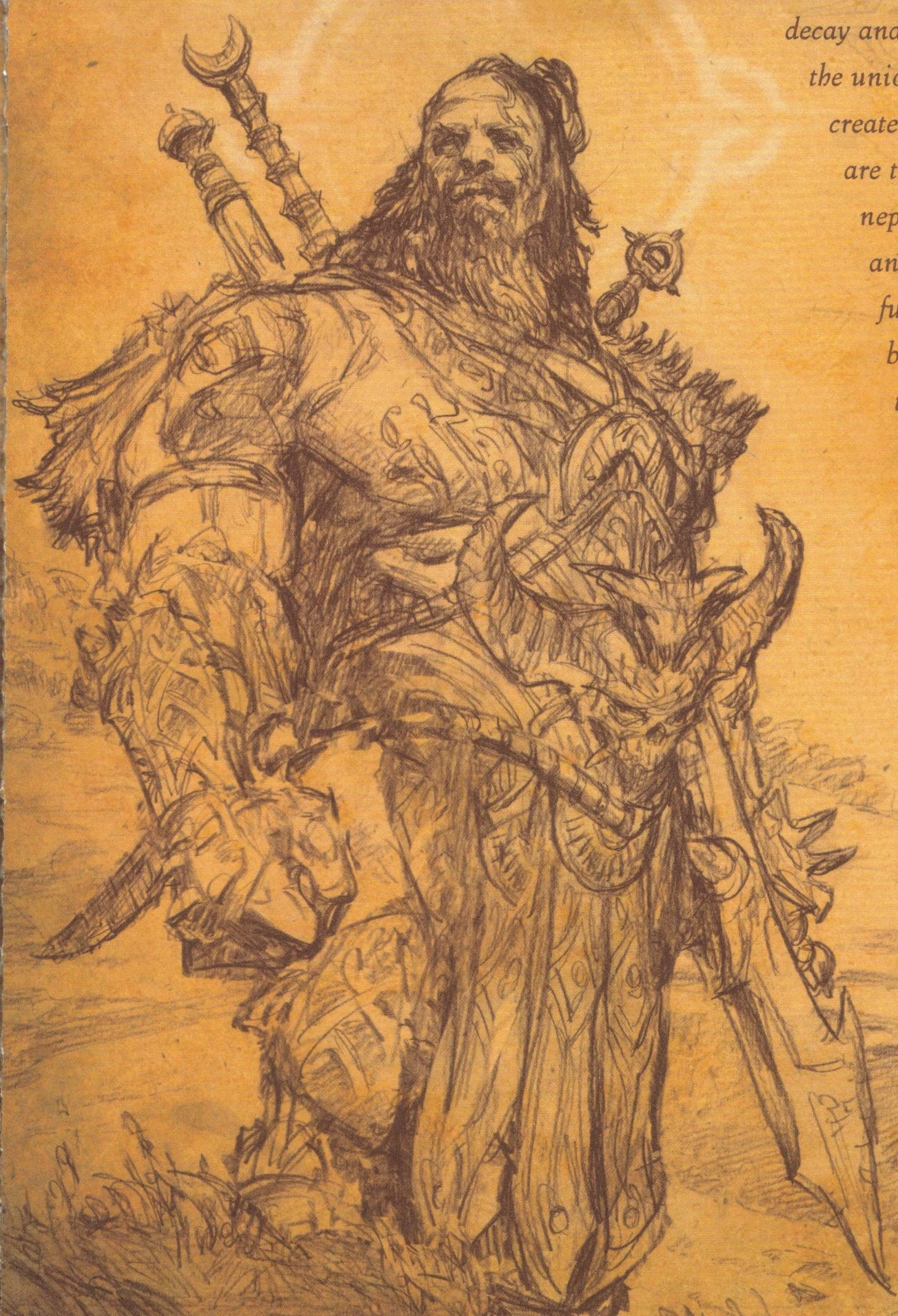
For generations the Barbarian tribes stood as the Worldstone's sworn guardians, a warrior people who asked nothing of the world but to defend the mountain that anchored it. When Baal breached the peak, that ancient duty failed in a single catastrophe.
To deny the corrupted Worldstone to the Lord of Destruction, Tyrael shattered it at Arreat's heart — and the mountain itself was broken in the blast, leaving a scarred crater where the holiest seat in the world had stood.
Once the glittering capital of the eastern jungles and the beating heart of the Zakarum faith, Kurast was among the great cities of Sanctuary — until the corruption at its center spread outward and consumed it.
Beneath the Temple City of Travincal, Mephisto lay imprisoned, and over generations his hatred rotted the holy city into a nightmare of twisted priests and shambling horrors. By the time heroes arrived in pursuit of the Dark Wanderer, the jewel of the east had become a ruin crawling with the faithful turned monstrous.
Lut Gholein is a proud port city on the edge of the Aranoch desert — a place of bazaars, sea air, and old secrets. Among those secrets is the tomb of Tal Rasha, where the Horadrim bound the Lord of Destruction within a living prison.
When the Dark Wanderer came east seeking to free his brother Baal, Lut Gholein stood at the crossroads of his path, and the Lesser EvilDuriel waited in the tombs beneath the sands to stop any who would reach the chamber first.
Westmarch is a proud western kingdom, a stronghold of crusaders and a center of power in the later ages of Sanctuary. Its walls had weathered many threats — but nothing like the one that came for it from the High Heavens themselves.
When Malthael became the Aspect of Death, it was upon Westmarch that he descended first, his reapers harvesting the souls of the living as he sought to purge the demonic essence he believed tainted all humanity. The city became the front line of a war not against Hell, but against an angel.
A storm-lashed coastal wilderness of moors, forests, and drowned villages, Scosglen is the homeland of the Druids and the keeping-place of the old pact between mortal and nature. Its people are hardy and superstitious, and not without reason.
In the bleak later age of Sanctuary, when Lilith returns to stir the world to darkness, Scosglen's misted reaches are among the first to feel the weight of her influence — its folklore of werewolves and drowned dead proving far more than mere stories.
It served two great purposes for the hidden world: it veiled Sanctuary from the eyes of both Heaven and Hell, and — under Inarius's hand — it dampened the power of the Nephalem, dimming their birthright generation by generation until they became ordinary humanity.
Its end came at Mount Arreat, when Baal corrupted it beyond redemption and Tyrael chose to shatter it rather than let the Lord of Destruction wield it. The world has been more exposed, and more dangerous, ever since.
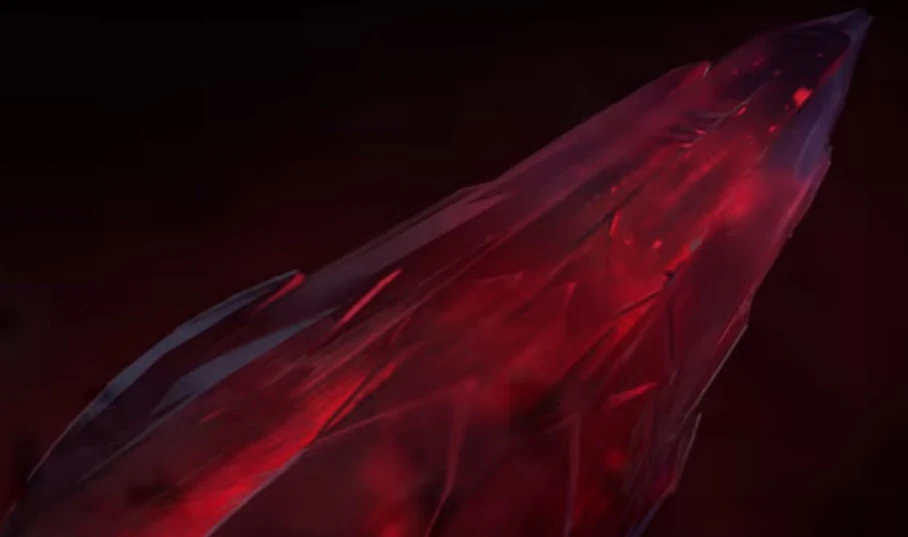
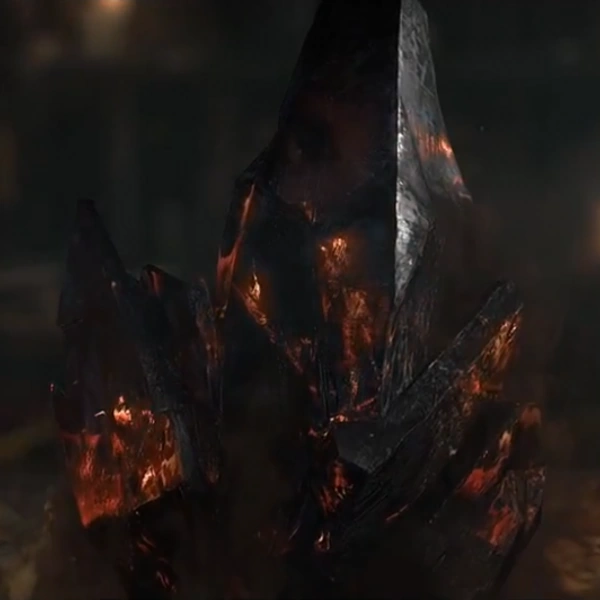
Soulstones are shards of crystal able to trap the essence of a demon — even one as mighty as a Prime Evil. They were the chief weapon of the Horadrim, who used them to bind the three brothers after the Dark Exile.
But a soulstone is a treacherous cage. Given time, the evil within seeps outward, corrupting both the stone and whoever bears it — turning a prison into a beachhead. Diablo festered in his stone beneath Tristram; Baal cracked his and forced Tal Rasha to become a living prison instead.
The Horadrim learned, too late and too often, that to bind an Evil is not to be rid of it — only to delay it.
The Black Soulstone was a monstrous work, forged to do what no ordinary soulstone could: hold not one Evil, but all seven at once. In theory it was humanity's salvation, a single vessel to imprison every Great Evil forever.
In practice it became the most dangerous object in Sanctuary. Adria used it to make Diablo whole as the one Prime Evil, sacrificing Leah to give him flesh. Later, Malthael seized it for his crusade against humanity, wielding the concentrated malice of the Burning Hells as a weapon of supposed mercy.
Whoever holds the Black Soulstone holds the gathered essence of the Dragon Tathamet — and the temptation to use it has corrupted everyone who has tried.
El'druin, the Sword of Justice, is the blade of Tyrael — a weapon of pure Heavenly light able to cut through deception and bind a foe to the truth. It is as much a symbol as a sword: justice given an edge.
With El'druin, Tyrael shattered the corrupted Worldstone. And when Tyrael fell to mortality, the blade was broken and later reforged — a fitting emblem for an Aspect who learned that justice, like the angel who wields it, can be broken and remade stronger.
When both the High Heavens and the Burning Hells discovered that Sanctuary existed, each moved to claim its people or wipe them from creation. The long struggle that followed is remembered as the Sin War.
Its turning point came not from angel or demon but from a mortal: a simple man who awakened the dormant power of the Nephalem within himself and others, becoming a force that terrified both higher powers. His sacrifice proved that humanity could choose its own path — neither wholly of the Light nor of the dark.
Moved by what they had witnessed, the Angiris Council put Sanctuary's fate to a vote. By a single voice — Tyrael's — mankind was spared, and left to determine its own destiny in the war of its makers.
Within the Burning Hells, the four Lesser Evils grew weary of serving beneath the three brothers. In a sudden, total rebellion, they overthrew the Prime Evils and cast them out of Hell entirely — banishing Mephisto, Diablo, and Baal into the mortal world of Sanctuary.
This was the Dark Exile, and it changed everything. The greatest powers of Hell now walked in secret among men, free to scheme and corrupt without the restraint of the Hells' own politics.
To contain the loosed brothers, the archangel Tyrael gathered the Horadrim and armed them with soulstones — beginning the long, secret hunt that would define the ages to come.
Beneath the cathedral of Tristram, Diablo's soulstone had festered for years, corrupting King Leoric and luring the desperate and the brave down into the catacombs. At last a lone hero descended through sixteen floors of nightmare and struck the Lord of Terror down.
But victory became catastrophe. To contain the demon, the hero drove Diablo's soulstone into their own brow — and was slowly consumed by it, becoming the Dark Wanderer who carried terror east across Sanctuary, freeing his brothers as he went.
This is the fall of Tristram: the moment a triumph became the seed of a far greater darkness, and the saga of Cain and his heroes truly began.
Long after the Prime Evils were thought broken, a coven spilled innocent blood to tear open the way between worlds — and Lilith, Mother of Sanctuary, daughter of Hatred, stepped back into the world she had made.
The Sanctuary she returns to is exhausted: its people poor, plague-struck, and desperate, easy prey for her promise that strength is forged only through suffering. Her vision is monstrous but coherent — a humanity hardened into a weapon no higher power could ever command again.
Against her stands her ancient lover and betrayer, the fallen angel Inarius, with his own design for the world's salvation. Caught between two fallen immortals, mortals must decide once more whether their fate belongs to anyone but themselves.